
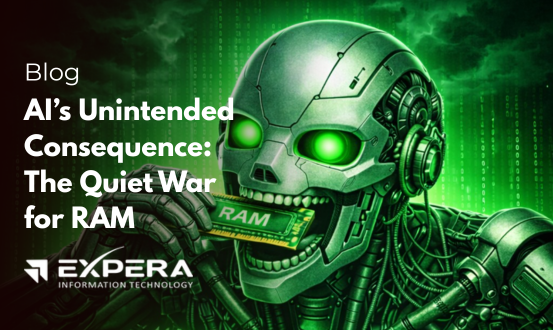
The AI race did not make computers more expensive because machines suddenly got smarter.
It made them more expensive because memory became strategic infrastructure.
For decades, RAM followed a familiar pattern. Consumer demand drove volume. Prices rose and fell in predictable cycles. Upgrades were optional. Supply eventually caught up.
That system is gone.
When Memory Stopped Being a Component

AI systems do not just use memory. They consume it at scale.
Training models, running inference, caching data, supporting parallel workloads, enabling real-time decision systems. All of it depends on keeping massive amounts of data as close to compute as possible. Memory stopped being a component and became a bottleneck.
Once a bottleneck appears, pricing logic changes.
AI data centres buy RAM in volumes consumers never could, with urgency consumers never will. They do not wait for discounts, seasonal demand, or refresh cycles. Memory unlocks performance, and performance unlocks revenue.
That resets the market upstream.
What Consumers See Downstream
What shows up for everyday buyers feels disconnected from AI entirely:
- Higher laptop and desktop prices
- Phones shipping with “baseline” memory that used to be premium
- Soldered RAM and no upgrade paths
- Fewer low-cost configurations
- Sudden price swings with no clear explanation
None of this is branded as an AI cost. It is framed as inflation, supply constraints, or “market conditions.”
But the real driver is structural.
Your computer is no longer competing with last year’s model. It is competing with AI infrastructure.
And infrastructure always wins.
Why This Is Not a Temporary Cycle
This volatility has no clean end point.
AI memory demand does not cool when consumers pause spending. It does not follow traditional upgrade cycles. It compounds.
Once RAM becomes essential infrastructure for AI, it stops behaving like a consumer commodity. Prices do not normalize. They reset.
AI did not just change software. It quietly rewired the economics of hardware.
That is why computers feel permanently more expensive, and why the instability does not feel temporary. It is not a phase.
It is the new baseline.
What Organizations Should Be Thinking About Now
For businesses, this shift matters beyond sticker shock. Hardware planning, lifecycle management, cloud strategy, and capital forecasting are all affected when core components behave like infrastructure assets instead of commodities.
Understanding why costs move the way they do is the first step to making smarter technology decisions in an AI-driven economy.
If your organization is planning hardware refreshes, AI adoption, or infrastructure investments and wants clarity in an increasingly volatile market, now is the time to step back and reassess strategy. Talk with a technology advisor who understands how AI is reshaping not just software, but the economics underneath it.
